Exhibitions Now On
"Wandering in the Wind" Dual Solo Exhibition by Lee Kuang-yu (李光裕) and Teng Pu-chun (鄧卜君)
Wandering in the Wind: Reconstructing the Dreamscape of Wandering through an Eastern Garden in the Cracks of Modern Time — A Contemporary Field Dialogue between Lee Kuang-yu and Teng Pu-chun. Within the Taiwan Prefectural Confucian Examination Hall (Taiwan Prefectural Confucian Examination Hall) in Taichung, a heritage building bearing the imprint of the late 19th-century Qing Dynasty imperial examinations, time does not flow linearly but rather resembles a "wind" that constantly swirls, overlaps, and penetrates. The curatorial title "Wandering in the Wind" not only symbolizes a light turn in artistic form but also marks, in an academic context, a "modern" spatiotemporal strategy—attempting to return to the source of classical spirit within the lingering warmth of modernity, yet reassembling it with a contemporary deconstructive gaze. The "environmental dialogism" in Lee Kuang-yu's sculptures and the "magical heterogeneity" in Teng Pu-chun's ink wash paintings are placed under the wooden framework of the Confucian Examination Hall. This solemn venue where scholars once pursued fame is reconstructed into a "contemporary garden" for spiritual dwelling. This is not merely a juxtaposition of works but a profound archaeology of the cultural motif of "dreaming back to the wandering garden." The Interplay of Void and Substance, and Environmental Permeation in Bronze Porosity. Lee Kuang-yu's sculptural practice consistently seeks balance between the volumetric logic of Western sculpture and the "ethereal emptiness" of Eastern thought. As analyzed by Wang Kun-sheng (王焜生), Lee's works often do not present themselves in fully enclosed forms but establish a kind of intersubjectivity between the subject and the environment through "hollowing out" and "penetration." In the exhibited works, "Four Seasons" and "Virtue and Power," the massive bronze volumes no longer appear heavy and oppressive amidst the mottled wooden beam structure of the examination hall; instead, due to their internal voiding, they create a convection with the light and shadow inside the hall. This penetrative quality of "wind" makes the sculpture a kind of "space capturer." "Water Moon" and "Celestial Vase" further demonstrate Lee Kuang-yu's contemporary transformation of classical imagery. The texture of the bronze surface and the traces of hand-carving form a "spatiotemporal palimpsest" of texture with the historical grain of the ancient architecture. For Lee Kuang-yu, sculpture is the "stone" and "window" in the garden; it is not only an object of contemplation but also a medium guiding the viewer's vision into infinite emptiness. Temporal-Spatial Folding and Illusionary Archaeology in the Ink Wash Heterotopia. If Lee Kuang-yu constructs the "void" through the carving of substance, then Teng Pu-chun uses the traces of ink on a flat surface to open up the "illusion." Teng's ink wash works have been endowed by Wang Kun-sheng with the contemporary definition of "magical landscape painting," whose core lies in the complete subversion of traditional brushstroke techniques and perspective rules. In the exhibited "Flipping Page Rock" and "Crimson Heaven Dark Rock," Teng Pu-chun constructs a "microcosm" that breaks physical gravity. Those layered, twisted, and swirling mountain rocks, like shale, are not merely scene-building but a "fold of time." Within the "modern" concept of time, classical elements are dismantled into visual symbols and reassembled into a sensory realm both familiar and alienating. This creates an interesting tension with the historical context of the Confucian Examination Hall: the examination hall was originally a symbol of norms and order, while Teng Pu-chun's works release an unstable, dreamlike sensation within the cracks of order. Works like "Fire Rock Cold Spring" and "Solitary Perching Stone on Blue Clouds" depict surreal states with extremely delicate brushstrokes, which visually embody the mentality of "wandering," seeking a habitat for the soul at the boundary between the absurd and the serene. Reopening a "Dream Interrupted in the Garden" within the Historic Site. The core of "garden wandering" lies in the dynamic "act of viewing." This exhibition plan maximizes the indoor-outdoor fluidity of the Confucian Examination Hall. According to the exhibition layout simulation, the works are not arranged around a center but are scattered and intermittently visible among the wooden pillars and beams, simulating the visual experience of "scenery changing with every step" in classical gardens. Dialogue of Structures: The wooden framework of the examination hall provides a regular rhythm, while Lee Kuang-yu's "Transmitting Fragrance" and "Spring on the Branch" break this regularity with organic curves. This confrontation between "geometry" and "nature" intensifies the drama of the contemporary garden. Convection of Time and Space: When the wind passes through the semi-open space of the examination hall and touches Teng Pu-chun's "Eagle Rock Misty Clouds," which unfolds like a long scroll, the ethereal mist and clouds in the painting seem to merge with the natural flow within the site. At this moment, the audience is no longer an onlooker but a wandering poet situated within this "sub-modern wandering." Chanting Facing the Contemporary While Looking Back at the Classical. The "Wandering in the Wind" exhibition, through Lee Kuang-yu's "bronze body" and Teng Pu-chun's "ink bones," transforms classical spirit into a sensory experience with contemporary vitality at the special historical node of the Confucian Examination Hall. This is not only a tribute to traditional "garden aesthetics" but also a practice of how individuals can regain their own tranquility within the fragmented, fluid time of "modern" living conditions. Lee Kuang-yu and Teng Pu-chun do not confine themselves to the historical baggage of their mediums but regard "the East" as a fluid, rewritable spiritual foundation. In the faint light and cool breeze of the Confucian Examination Hall, this exhibition is not only a dream return but also a profound chant about the future possibilities of Eastern aesthetics.
Event Details
- 2026-05-30 — 西區(臺中市)
You Might Also Like
Exhibitions JAN 19 — DEC 31 Now On
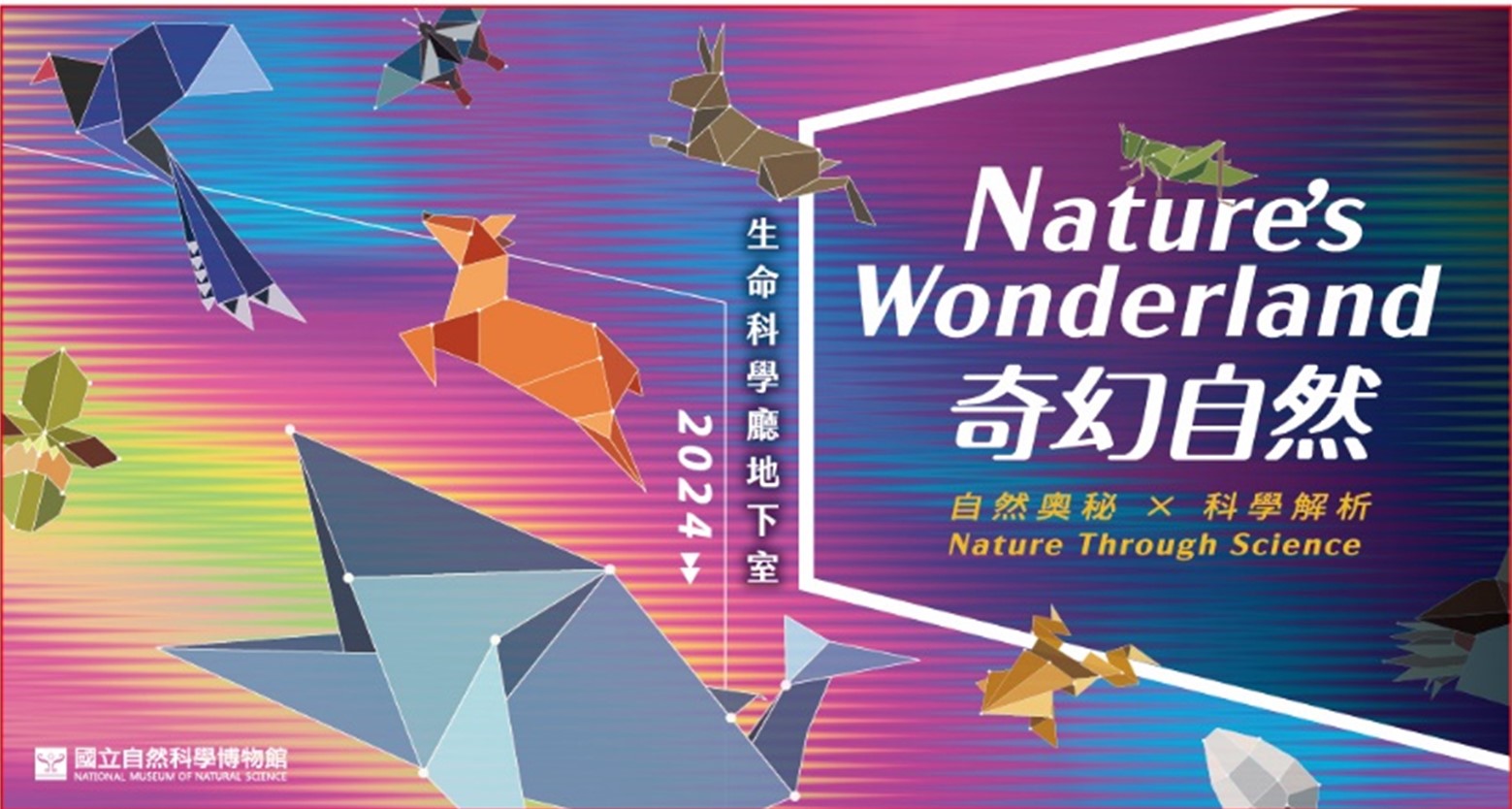
National Museum of Natural Science "Fantastic Nature" Permanent Exhibition
The National Museum of Natural Science welcomes a magnificent transformation of its Life Science Hall. The new…
Exhibitions SEP 17 — DEC 31 Now On
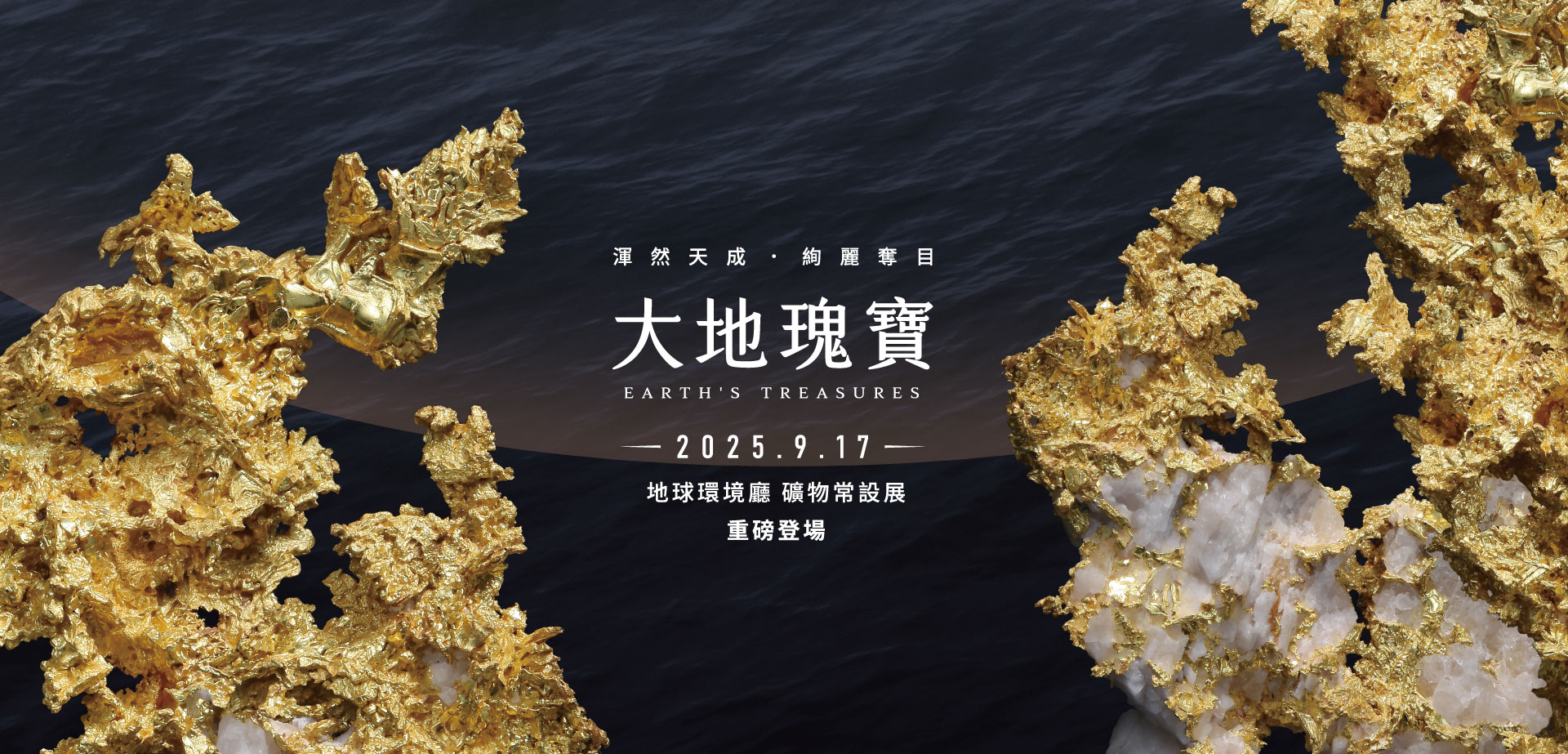
National Museum of Natural Science "Treasures of the Earth" Mineral Permanent Exhibition
After 5 years of planning, the National Museum of Natural Science is now proudly launching Taiwan's first large-scale…
Exhibitions JAN 1 — AUG 9 Now On
"24/7::: Repetition and Layering in Creation" Children's Art Education Exhibition
"24/7" (twenty-four-seven), meaning 24 hours a day, 7 days a week, is an idiom in the English-speaking world used to…