Exhibitions Now On
Dwelling Schemes - Tuan Tsun-chen (段存真) Solo Exhibition
In Martin Heidegger's (1889–1976) understanding, humans build in order to dwell. However, dwelling is not equivalent to the general concept of residing, but rather a more fundamental state of existence, namely "poetic dwelling." The "poetic" here is not a lyrical imagination detached from reality, but an overall state encompassing all conditions of daily life. Therefore, "poetic dwelling" should not be merely light and thin poetry, but rather a "dwelling scheme" concretely implemented in daily livelihood.
However, the "dwelling schemes" of contemporary people never describe only the ownership relationship between people and their houses; they simultaneously extend into the overall environment we actually inhabit. We buy groceries at supermarkets, gather for assemblies and lectures at school flag-raising platforms, walk dogs in small parks surrounded by high-rises; on holidays, we drive to crowded tourist spots or linger for a moment in cafes overlooking mountain views. These seemingly fragmented daily snippets are silently pieced together and accumulated, forming specific and minute "dwelling schemes" that shape the lifestyle of Taiwan as an island in contemporary society. These schemes may not be particularly "poetic," but they are vivid, direct, and even possess a certain rough texture of reality, precisely the important material from which artists can respond to the world they inhabit.
As a sculpture creator, I attempt to transform these "phenomena of existence" into observable and tangible entities through form, structure, material, and bodily labor. These works have a clear architectural quality, but they never refer to any specific building in our visual experience. Those spaces are the result of repeated contemplation and reorganization in the mind. I try to re-examine the complex patterns of architecture, stripping away superfluous details, retaining only approximate outlines. Curves, stairs, passages, walls, and geometric protrusions or recesses. These elements are arranged and combined in different ways, with subtle formal principles that make each dwelling place present its unique structural relationship and generate new existence. These reinterpreted "dwelling schemes," like reborn in the clear light after rain, possess a certain newborn brightness and openness. The originally expressionless concrete jungle, after transformation, becomes an existence rich in vitality; yet they are different from the enormity and inaccessibility of real buildings, being reduced to miniature forms, making them graspable and observable in detail.
The works start from the extraction of concepts, through the layout of two-dimensional images, then through the handling of materials and structure, gradually realized as existences in three-dimensional space. This is not merely a deductive process at the conceptual level, but a practice highly dependent on bodily labor. And after the sculpture takes shape, repairing and polishing the cement surface requires continuously investing bodily labor and significant time as the "construction" cost, allowing those originally ambiguous yet thought-provoking spatial images to slowly take shape.
"Dwelling Schemes" is both a metaphor for contemporary society and a hypothetical translation. It attempts, within the constraints of reality, to describe deficiency as a possibility approaching beauty. Through creation, I attempt to build a poetic dwelling where I can settle myself amidst the intertwining of reality and imagination.
#SoloExhibition #Sculpture
However, the "dwelling schemes" of contemporary people never describe only the ownership relationship between people and their houses; they simultaneously extend into the overall environment we actually inhabit. We buy groceries at supermarkets, gather for assemblies and lectures at school flag-raising platforms, walk dogs in small parks surrounded by high-rises; on holidays, we drive to crowded tourist spots or linger for a moment in cafes overlooking mountain views. These seemingly fragmented daily snippets are silently pieced together and accumulated, forming specific and minute "dwelling schemes" that shape the lifestyle of Taiwan as an island in contemporary society. These schemes may not be particularly "poetic," but they are vivid, direct, and even possess a certain rough texture of reality, precisely the important material from which artists can respond to the world they inhabit.
As a sculpture creator, I attempt to transform these "phenomena of existence" into observable and tangible entities through form, structure, material, and bodily labor. These works have a clear architectural quality, but they never refer to any specific building in our visual experience. Those spaces are the result of repeated contemplation and reorganization in the mind. I try to re-examine the complex patterns of architecture, stripping away superfluous details, retaining only approximate outlines. Curves, stairs, passages, walls, and geometric protrusions or recesses. These elements are arranged and combined in different ways, with subtle formal principles that make each dwelling place present its unique structural relationship and generate new existence. These reinterpreted "dwelling schemes," like reborn in the clear light after rain, possess a certain newborn brightness and openness. The originally expressionless concrete jungle, after transformation, becomes an existence rich in vitality; yet they are different from the enormity and inaccessibility of real buildings, being reduced to miniature forms, making them graspable and observable in detail.
The works start from the extraction of concepts, through the layout of two-dimensional images, then through the handling of materials and structure, gradually realized as existences in three-dimensional space. This is not merely a deductive process at the conceptual level, but a practice highly dependent on bodily labor. And after the sculpture takes shape, repairing and polishing the cement surface requires continuously investing bodily labor and significant time as the "construction" cost, allowing those originally ambiguous yet thought-provoking spatial images to slowly take shape.
"Dwelling Schemes" is both a metaphor for contemporary society and a hypothetical translation. It attempts, within the constraints of reality, to describe deficiency as a possibility approaching beauty. Through creation, I attempt to build a poetic dwelling where I can settle myself amidst the intertwining of reality and imagination.
#SoloExhibition #Sculpture
Event Details
- 2026-05-20 — 東海大學
You Might Also Like

Exhibitions JAN 19 — DEC 31 Now On
National Museum of Natural Science "Fantastic Nature" Permanent Exhibition
The National Museum of Natural Science welcomes a magnificent transformation of its Life Science Hall. The new…
Exhibitions SEP 17 — DEC 31 Now On
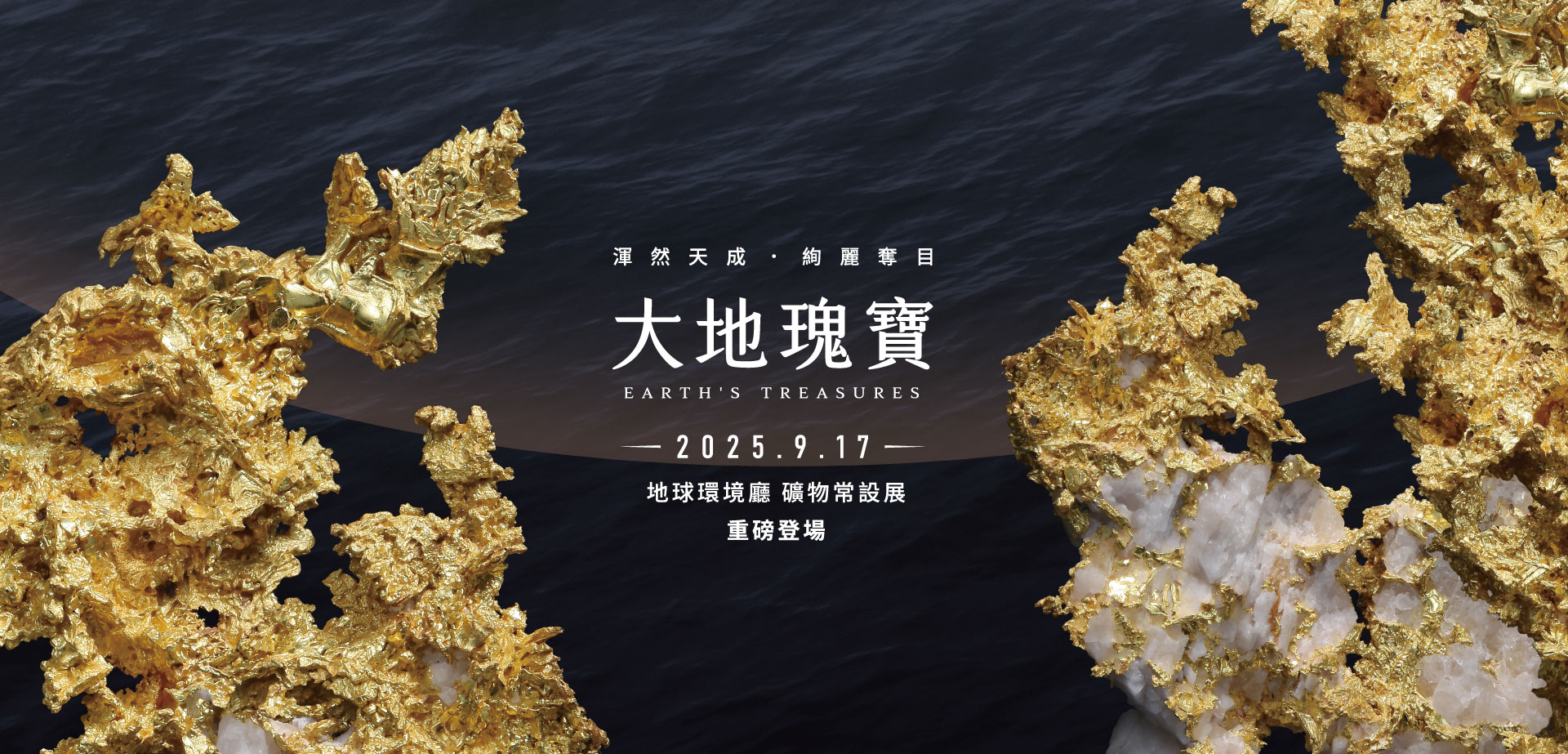
National Museum of Natural Science "Treasures of the Earth" Mineral Permanent Exhibition
After 5 years of planning, the National Museum of Natural Science is now proudly launching Taiwan's first large-scale…
Exhibitions JAN 1 — AUG 9 Now On
"24/7::: Repetition and Layering in Creation" Children's Art Education Exhibition
"24/7" (twenty-four-seven), meaning 24 hours a day, 7 days a week, is an idiom in the English-speaking world used to…