Exhibitions Now On
Encounter, Understanding, Cherishing – Memorial Exhibition for Mr. Wu Ching-yu (吳清友)
Mr. Wu Ching-yu (吳清友) (1950-2017) was born into a farming family in Ma-sha-gou Ping-sha Village, Chiang-chun Township, Tainan County. He had nine siblings and was the fourth among the brothers. He graduated from the Department of Mechanical Engineering at Taipei Institute of Technology in 1972. Early in his career, he spent 18 years in the sales and operation of professional kitchen and hotel equipment. However, at nearly 40 years old in 1989, he founded Eslite Bookstore (誠品書店), turning a corner to become a cultural figure. He also established "Eslite Gallery" (誠品畫廊), driven by a sense of mission and idealism, dedicating himself to promoting contemporary Chinese art. His efforts yielded remarkable results, and in 2009, it became the first Taiwanese gallery to participate in the world-renowned Art Basel. Through his dedicated efforts to advance Taiwan's cultural endeavors, Mr. Wu Ching-yu thus encountered art, fell in love with art, sponsored art, and befriended artists.
The exhibition title "Encounter, Understanding, Cherishing" is a phrase Mr. Wu Ching-yu often said during his lifetime. It succinctly expresses his way of viewing people and the world, reflecting his warm and steadfast ethical practice throughout his life. As the title of this exhibition, it is not only a tribute to Mr. Wu but also an emotional thread running through the exhibition space, guiding visitors to revisit his various encounters with people, art, and the land, and to closely read how that understanding and gentleness shaped his unique life trajectory.
The exhibition is divided into four sections and a reading space, all structured around the important emotional coordinates of his life, forming a visual narrative akin to a biography. Some works may not be widely renowned, yet they carry a unique warmth because they were gazed upon and cherished by him; they bear silent encounters and are pages about recognition and cherishing. First, "Love and Benevolence" reveals the most质朴 aspect of Mr. Wu's life: he came from grassroots origins and always held deep understanding and respect for laborers; he anonymously donated to help sick children and often extended assistance under the guise of purchasing collections. He used art as a medium, making collecting an action responding to social realities. Second, "Philosophical Reflections on Life" turns to abstract and spiritual dimensions, responding to his inner quest after facing a sense of nihilism in middle age, also showing his concern for Eastern aesthetics and religious thought. "Friendship with Artists" showcases the rich interpersonal network and spiritual exchanges between him and artists, which was not merely support from a gallery or collector to artists but also a testament to mutual understanding and co-creation. The final section, "Scenery and Homeland Sentiment," focuses on works depicting Taiwan's mountains, rivers, and land, carrying Mr. Wu's deep attachment to his hometown and reflecting his original intention of "doing something for this land" behind founding Eslite and promoting cultural endeavors. Additionally, a corner in the exhibition space is specially arranged like an Eslite bookstore, with bookshelves displaying books cherished and recommended by Mr. Wu during his lifetime, reflecting his spiritual world and continuing his lifestyle of accompanying daily life with reading.
Therefore, "Encounter, Understanding, Cherishing" is not just a quote; it is a distillation of Mr. Wu Ching-yu's life experience and his posture of dialogue with the world. Through this exhibition, we may follow his footsteps to see how art gently enters life and how one's beliefs continue to ferment and extend in understanding and empathy.
The exhibition title "Encounter, Understanding, Cherishing" is a phrase Mr. Wu Ching-yu often said during his lifetime. It succinctly expresses his way of viewing people and the world, reflecting his warm and steadfast ethical practice throughout his life. As the title of this exhibition, it is not only a tribute to Mr. Wu but also an emotional thread running through the exhibition space, guiding visitors to revisit his various encounters with people, art, and the land, and to closely read how that understanding and gentleness shaped his unique life trajectory.
The exhibition is divided into four sections and a reading space, all structured around the important emotional coordinates of his life, forming a visual narrative akin to a biography. Some works may not be widely renowned, yet they carry a unique warmth because they were gazed upon and cherished by him; they bear silent encounters and are pages about recognition and cherishing. First, "Love and Benevolence" reveals the most质朴 aspect of Mr. Wu's life: he came from grassroots origins and always held deep understanding and respect for laborers; he anonymously donated to help sick children and often extended assistance under the guise of purchasing collections. He used art as a medium, making collecting an action responding to social realities. Second, "Philosophical Reflections on Life" turns to abstract and spiritual dimensions, responding to his inner quest after facing a sense of nihilism in middle age, also showing his concern for Eastern aesthetics and religious thought. "Friendship with Artists" showcases the rich interpersonal network and spiritual exchanges between him and artists, which was not merely support from a gallery or collector to artists but also a testament to mutual understanding and co-creation. The final section, "Scenery and Homeland Sentiment," focuses on works depicting Taiwan's mountains, rivers, and land, carrying Mr. Wu's deep attachment to his hometown and reflecting his original intention of "doing something for this land" behind founding Eslite and promoting cultural endeavors. Additionally, a corner in the exhibition space is specially arranged like an Eslite bookstore, with bookshelves displaying books cherished and recommended by Mr. Wu during his lifetime, reflecting his spiritual world and continuing his lifestyle of accompanying daily life with reading.
Therefore, "Encounter, Understanding, Cherishing" is not just a quote; it is a distillation of Mr. Wu Ching-yu's life experience and his posture of dialogue with the world. Through this exhibition, we may follow his footsteps to see how art gently enters life and how one's beliefs continue to ferment and extend in understanding and empathy.
Event Details
- 2026-04-06 — 池上穀倉藝術館
You Might Also Like
Exhibitions NOV 14 — DEC 31 Now On
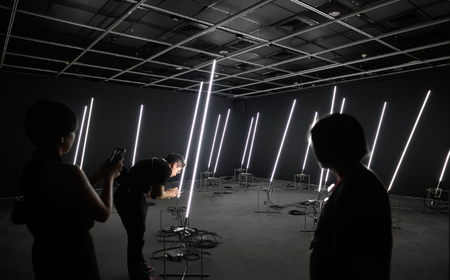
VR Online Exhibition
The Museum of Contemporary Art, Taipei presents a collection of virtual reality exhibitions, transforming its galleries…
Exhibitions JAN 19 — DEC 31 Now On
National Museum of Natural Science "Fantastic Nature" Permanent Exhibition
The National Museum of Natural Science welcomes a magnificent transformation of its Life Science Hall. The new…
Exhibitions SEP 17 — DEC 31 Now On
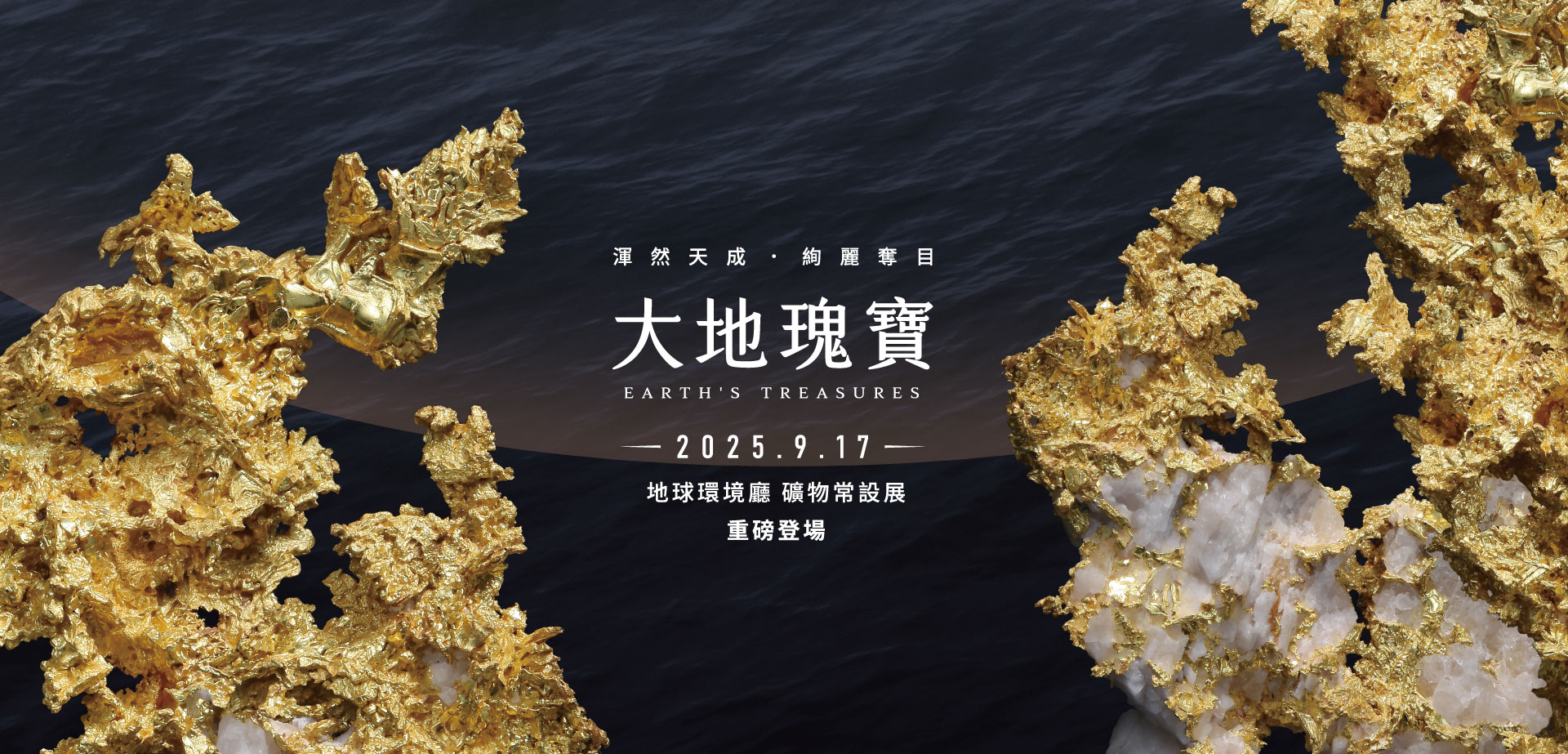
National Museum of Natural Science "Treasures of the Earth" Mineral Permanent Exhibition
After 5 years of planning, the National Museum of Natural Science is now proudly launching Taiwan's first large-scale…